Some things don't need reinventing. They need rediscovering.
Olive oil has been managing skin health since before the Roman Empire had roads. Egyptian physicians prescribed it. Greek athletes swore by it. Phoenician traders carried it across the known world not just as food, but as medicine — and as beauty ritual. That's four thousand years of clinical observation, pre-dating every laboratory that ever synthesised a paraben.

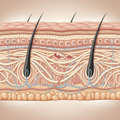
And here's an uncomfortable truth the modern skincare industry doesn't advertise: the molecular structure of olive oil is uniquely compatible with human skin lipids. It doesn't sit on the surface pretending to work. It penetrates. It feeds. It participates in the skin's own repair mechanisms in ways that petroleum derivatives simply cannot.
The question was never whether olive oil works. The question is whether it’s prepared correctly.
Olive oil straight from the bottle is for cooking or putting on salad. What we do with it is something else entirely.
The active compounds, the squalene, the polyphenols, the lipids, the fat-soluble vitamins, they need to be liberated, concentrated, and stabilised before they can do their best work.
The preparation method is everything. It always was. Mabel Gray knew this in 1890s East Anglia, long before the word "formulation" entered anyone's vocabulary. It's why her results surprised people who'd never thought of an ingredient older than their grandmother as something serious.
We've kept those techniques. Refined them across decades and hundreds formulations, and blended the oils with compatible bio-actives and the best of modern cosmetic science’s ingredients, to develop a system that supports the skin’s lipid architecture and promotes its cellular signalling environment.
And we understand that the way it’s all put together has its own impact on how the skin can use it. Because there is more to a ‘living’ formula than the sum of its parts.
Mabel Gray Skincare. Ancient intelligence. Exacting preparation.