The beauty industry loves the word *sculpting*.
It sounds like suggesting that the face is rather like a piece of clay: passive material just waiting for the right tool, the right technique and a skilful hand to push it back into a more acceptable shape. Gua sha and rollers do have their place in maintaining resilience, and promoting skin longevity. But your face isn't inert material.
And your skin isn't passive wrapping stretched over it.
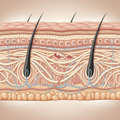
The face is a living, sensing and highly responsive environment in which skin, fascia, muscle, nerves, blood vessels, lymphatic vessels and extracellular matrix are constantly influencing one another. Touch one part of that system and the effects rarely remain in the department where they began. Biology's never been especially respectful of departmental boundaries.
So facial sculpting with gua sha may be better understood as introducing carefully controlled mechanical information into living tissue, tissue that's equipped with molecular sensors that read pressure and movement, translate them into biochemical messages, and relay those messages through the cellular signalling networks.
Because the skin is listening. And it hasn’t forgotten how to respond.
What Is Mechanotransduction?
Cells don't respond only to chemical ingredients. They also sense pressure, stretch, temperature, compression and movement.
Mechanotransduction is the process by which cells detect a physical force, and translate it into biochemical signals. The term was first coined in general cellular biophysics in the late 1980s. But then cutaneous researchers began mapping how dermal fibroblasts and keratinocytes sense physical tension via integrins and focal adhesion complexes. This marked the first era where mechanotransduction was systematically studied, in skin wound healing, scar formation, and collagen remodeling.
Then there was the discovery of the "transcription factors" that act as primary mechanosensors, and this further revolutionized tissue biology. It proved that the physical stiffness of the extracellular matrix directly dictates whether a skin cell either proliferates, ages, or triggers fibrosis. Wow.
And then David Julius and Ardem Patapoutian won the Nobel Prize in 2021 for their discoveries of thermal and mechanical transducers in the body, especially the skin. This discovery of the identity of molecular transducers responsible for detecting and converting heat, cold and touch into nerve impulses in the sensory nervous system solved an age old mystery.
When the "mechanical" environment changes, the message is converted to signals that travel through the cells and influence how they respond and behave.
This isn't peculiar to gua sha 'treatment. Mechanotransduction is involved in muscle adaptation, bone remodelling, wound healing, vascular function and the continuing maintenance of connective tissue. Exercise and activity is a good thing. And mechanotransduction gives us a more biologically coherent way of thinking about the advantages of facial massage.

A gua sha tool doesn't instruct fibroblasts to manufacture collagen on command. Nor does every pleasant sweep across the cheek produce a clinically meaningful remodelling response. But research does show that skin and connective-tissue cells can respond to mechanical cues. In one study, a precisely calibrated oscillating massage device increased the expression of several dermal and dermal–epidermal junction proteins in ex-vivo skin, including procollagen-1, decorin, fibrillin and tropoelastin. In the accompanying small clinical study, the device also amplified some effects of an anti-ageing cream.
That doesn't prove that a rose quartz tool produces the same response. It establishes the more important principle: mechanical stimulation can become biological signalling.
Skin, Fascia and Facial Muscle Aren't Separate Subjects
Facial appearance is commonly reduced to collagen, wrinkles and hydration. All of which matter enormously. But the visible face is also shaped by the behaviour of its muscles, the distribution of fluid, the mobility of connective tissue and the way skin is mechanically supported beneath the surface.
Facial muscles are unusual. Many connect partly into the skin rather than simply moving one bone against another. This helps create the extraordinary range of human expressions, but it also means that repeated muscular tension can become visible at the surface. The jaw clenches. The brow contracts. The muscles around the mouth recruit themselves into expressions we may no longer realise we're making.
Gua sha isn't resistance training for the face, and it cann't be described as “building” facial muscle. Its more credible role is almost the opposite: helping reduce excessive resting tension and encouraging movement through the superficial soft-tissue environment.
A 2025 randomised study involving 34 women compared facial rolling with gua sha for ten minutes, five times a week, over eight weeks. Both groups showed measurable changes in facial contour. The gua sha group showed greater reductions in measured masseter muscle tone and stiffness, while the roller group showed greater changes in skin elasticity. Very interesting.
It was a small study, it included no untreated control group, and it doesn't tell us whether the changes persist after treatment stops. But it supports a useful distinction: different forms of mechanical stimulation may influence different parts of the facial environment.
Circulation, Fluid, and Toxins We Can Happily Retire
Facial massage can temporarily increase local skin blood flow. One small study found that five minutes of facial roller massage increased blood flow for at least ten minutes, while regular use over five weeks improved the skin's vascular dilation response.
This doesn't mean blood flow automatically creates collagen. It means the vascular environment is responsive to touch and movement. Gentle facial massage may also help move temporarily accumulated tissue fluid, which can make the face appear less puffy and its contours more defined. These effects may be quite real without pretending that the gua sha tool has personally escorted unspecified “toxins” from the cheek to the nearest exit.
The lymphatic system is a sophisticated fluid-balancing and immune network, not a basic household drain. And more pressure isn't necessarily more effective. Lymphatic structures are superficial, and aggressive scraping can irritate the skin, aggravate visible capillaries and create inflammation — the very thing an allegedly restorative ritual was meant to avoid. The objective is communication, not conquest. To nourish and to care.
When Mechanical Signalling Meets Skincare
This is where facial sculpting becomes especially interesting within the Mabel Gray Skincare System.
The formula and the tool aren't doing the same job. A well-designed bio-concordant moisturiser provides glide, allowing the tool to move without dragging or repeatedly stretching the skin surface. But the Intensive Hydration Moisturiser is more than massage lubricant. Its hydration and lipid environment helps support the barrier and the conditions in which skin cells must continue their normal work.
The Advanced Boost Serum which would usually be applied first, contributes another dimension. Its peptides don't command the skin to become younger. They reinforce particular biochemical signals associated with matrix maintenance, renewal and skin communication. And facial massage as the third step adds a different class of information: mechanical signalling.
One supplies recognised materials and biochemical cues. The other introduces controlled pressure, stretch and movement. Both arrive in a tissue that is already sensing, interpreting, adapting and deciding what happens next.
Because there is more to a living formula than the sum of its parts. And there may also be more to the way it's applied than the beauty industry has generally allowed.
The Nervous System Is in the Room Too
There's another dimension that can't be reduced to circulation or collagen.
Skin is a sensory organ. Touch produces neural information. Facial muscles participate in expression, protection, communication and emotional state. The jaw and brow often reveal an internal alarm long before we're consciously aware of feeling stressed.
A slow facial ritual won't resolve the causes of chronic stress, either. But it may interrupt a pattern of unconscious muscular holding, encourage awareness of where tension is being carried and provide calmer sensory input to the wider nervous system.
This isn't merely cosmetic. It's another example of reciprocal biology: state affects expression, expression affects muscle tone, muscle tone affects what appears at the surface, and touch feeds new information back into the system.
The manic bazaar, as we've sometimes characterised the healthy cell membrane, is open for business again.
How Much Pressure Does Intelligent Skin Need?
Gua sha shouldn't hurt, bruise or leave the face feeling scraped.
Use enough moisturiser or suitable facial medium to let the tool glide freely. Hold the tool at an angle of 15 to 45 degrees. It's not good to be digging its edge into the skin. Work deliberately, and treat delicate or reactive areas with considerably less enthusiasm than social media demonstrations sometimes encourage. For some, a roller may feel far better suited that the gua sha stone.
The tool should be cleaned after use. And gua sha should not be used over broken, infected, sunburnt or acutely inflamed skin. Anyone with rosacea, significant vascular fragility, a bleeding disorder, active dermatological disease, or recent injectables or facial procedures should seek advice appropriate to their circumstances before proceeding.
Because the principle of mechanotransduction cuts both ways. Cells respond to mechanical forces', but not every mechanical signal is beneficial. Too much friction, pressure or repetition may become irritation rather than useful information.
This Isn't Cosmetic Chiselling
The value of gua sha doesn't depend on believing that a fortunate piece of jade or rose quartz can permanently shape a new jawline.
Its more credible value lies in regular, intelligent participation with the living facial environment: supporting temporary fluid movement, encouraging microcirculation, easing habitual muscular tension, maintaining soft-tissue mobility and contributing gentle mechanical signals alongside appropriate lipid, hydration and peptide support. The intelligence remains in the biology.
The hands, the formula and the tool simply help create more favourable cellular conversations, and boost the processes of renewal and resilience.
Because your skin hasn't forgotten how to respond.
References
\[^1]: Caberlotto E, Ruiz L, Miller Z, Poletti M, Tadlock L. “Effects of a skin-massaging device on the ex-vivo expression of human dermis proteins and in-vivo facial wrinkles.” *PLOS ONE*. 2017;12(3):e0172624. [https://doi.org/10.1371/journal.pone.0172624](https://doi.org/10.1371/journal.pone.0172624)
\[^2]: Ahn S, et al. “Comparative Effects of Facial Roller and Gua Sha Massage on Facial Contour, Muscle Tone, and Skin Elasticity: Randomized Controlled Trial.” *Journal of Cosmetic Dermatology*. 2025. [https://doi.org/10.1111/jocd.70236](https://doi.org/10.1111/jocd.70236)
\[^3]: Miyaji A, Sugimori K, Hayashi N. “Short- and long-term effects of using a facial massage roller on facial skin blood flow and vascular reactivity.” *Complementary Therapies in Medicine*. 2018;41:271–276. [https://doi.org/10.1016/j.ctim.2018.09.009](https://doi.org/10.1016/j.ctim.2018.09.009)