For decades, oily skin has been treated like the skin had a behavioural problem. Somewhere between middle school acne panics and targeted social media ads, a major 'lie' took root: that "oily skin" is a permanent, biological sentence, a "skin type" you were stuck with.
But it's not true. Your skin isn't aggressive, it’s panicked. Skin doesn't go rogue.
And yet an oily or acne-prone skin isn’t merely a cosmetic inconvenience when your face accompanies you into every meeting, interview and first impression. Because your skin barrier is actually a lipid matrix made up mainly of ceramides, cholesterol, free fatty acids and other lipids. These are the natural fats that hold skin cells together and keep moisture in. When those fats run low, the skin panics and produces more of the sticky, emergency oil we call ‘shine'.
So many young persons are still often 'taught' that their skin is a 'type' they're stuck with, like it's an oil refinery that needs to be scrubbed, stripped, and mattified into submission. Too much oil. Wash it off. Strip it. Mattify it. Punish it into submission.
None of which addresses the real issue. Because, if you strip what's there, then the already stressed and exhausted skin makes more still. The cycle deepens, and it becomes a race to see who can win.
But WHY is the skin producing oil?
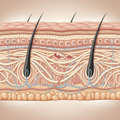
There's a very important thing to understand about all this. The skin 'barrier is built from ceramides and other lipids, the natural fats that act like mortar between skin cells. These 'fats' (such an unfortunate name!) keep moisture in and irritants out. When the barrier runs low on them, water (hydration) escapes faster. The skin senses this threat and switches into emergency mode, flooding the surface with whatever oil it can make quickly. That extra oil is not the root cause problem. It's like a distress signal that the protective good fats are missing.
The downside of a very low-fat or “fat-free” diet is that it can leave both your skin and your brain short of the healthy lipids and fatty acids they need to work well. Your skin barrier relies on certain lipids to stay strong and calm. Your brain uses 'fats' too. When those building blocks are missing for a long time, the skin may struggle more and the mind can feel the strain as well.

The "Oiliness", then, is really an SOS Signal. Skin doesn't produce this shine out of spite, it's in Emergency Overdrive. When your barrier is depleted of its native fatty acids and ceramides (lipids), water evaporates fast. To save itself from dehydration, the skin sends its sebaceous glands into survival mode, flooding your face with whatever oil they can manufacture quickly, incomplete as they may be. But this is inevitably a deficient lipid profile, with more of the lipids that oxidise and clog.
The "Strip and Rebound" Trap has been fallen into by so many. Using harsh foams, squeaky-clean scrubs, and drying toners strips away the temporary shield your skin just built. So your skin panics, it senses feeling unprotected, and doubles down on oil production. That isn't a permanent skin type, it's a feedback loop. You strip it, and it rebounds.
Calling oily skin a permanent “type” meant people were expected to accept the endless stripping and suppressing as the only way to manage the oil.
Now, from current research, we know better.
But you can't do nothing about this Oiliness problem. It is a problem.
Because the social consensus infers that visible oil means poor grooming, careless, undisciplined, or haven’t found the self-control to wash properly. But the person with oily skin usually is trying twice as hard.
And for a young professional, that embarrassment can become especially acute. Shine is widely interpreted negatively. Acne becomes something colleagues are surely noticing.
Not Just 'Too Much' Oil; The Lipids Are Out Of Balance:
The emergency oil your skin creates when stripped usually lacks essential linoleic fatty acids. This makes the sebum thick, sticky, and prone to oxidation, congestion, and blockages, in pores. Your face doesn't actually have "too much" oil; it has a high volume of poor-quality oil in the wrong place, because it's starving for the healthy lipids and ceramides it needs. But the skin's priority is barrier building with whatever is available, so it goes to work. Strip it again, and you don’t correct the recipe, you simply make the skin start over again.
Flipping the Narrative: From Combat to Care & Nourish.
The great challenge is how to transition. It's a stress in itself to ditch the "Squeaky Clean" Standard. But if your face feels tight after washing, that isn't clean, it's the feeling of damage. Tightness is your barrier screaming for help. So
Feed the Hunger: Counterintuitive as it sounds, oily skin is often dehydrated, ceramide deficient, and lipid-starved. Feeding it lightweight, skin-identical lipids (like squalane and linoleic-rich plant oils) sends a biological signal to your glands: "The barrier is secure. It's OK. You can stand down."
Dethrone the "Oily Skin" Label: Your skin isn't defective. It’s an amazingly complex, dynamic, living organ doing heroic, non-stop repair work with whatever limited materials it's given.
When you stop treating the shine as the 'enemy' and start feeding the barrier instead, the emergency oil production often calms down. The face feels less tight. The constant “do I look greasy?” worries start to quiet. And that matters — in meetings, on video calls, and in every first impression you walk into.
You don't have to scrub harder or punish your skin into submission. You can choose care over combat.
And give it time.
Progress is rarely overnight, but it is steady when the skin finally gets what it's been missing.
Many people notice a real difference within weeks once they consistently support the barrier instead of stripping it.
For a simple place to start, look for an intensive moisturiser with good penetration that includes skin-identical lipids (olive, squalane and other linoleic-rich oils). One option some people find helpful is Mabel Gray Intensive Hydration Moisturiser.
This intensive moisturiser is what's called a 'bio-concordant' formulation, which means it's designed for a 'pro-architecture' approach to support skin's innate repair intelligence, in harmony with the skin’s native composition, architecture and biological priorities.
The brand is less important than the principle: nourish, don’t strip. But "nourish" is the key, not the marketing promise, because you need something balanced to what the skin recognises and incorporates.
Your skin is not broken. It's been trying hard for a long time, working overtime to protect you with whatever tools it had. You have been working hard too, searching for the clear, calm look you wanted. Which raises another point: stress and distress are bad for skin. We'll explain more of why in another article, discussing that medical science calls the 'brain-skin axis".
But now, with nourish and care the new program, the two of you can stop the exhausting, perpetual 'fighting'. When you relax, feed the barrier, and give it time, something quieter happens. The skin no longer has to shout with excess oil. You no longer have to scrub and punish. You begin to understand each other. You start working together.
And when that happens, the beauty that was always there can finally come through, not forced, not stripped, just allowed.
That is not vanity. That's self-care and self-respect.