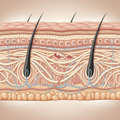
How barrier distress, nervous-system signalling, and emotional triggers may all become caught up in the same biological conversation.
Facial redness is one of the skin’s most visible signals, and one of its least specific. It may appear as a brief flush after heat, exertion or embarrassment; it may linger on with sensitivity and barrier distress; it may be accompanied by irritation, allergy or dermatitis; or become recurrent and persistent and diagnosed as rosacea.
And on darker skin, the same disturbance may be felt more clearly as heat, burning or stinging, rather than visible color change at all. These situations can look deceptively alike while arising through very different sources of vascular, neural, immune, psychological inputs and activity. So redness isn’t a 'diagnosis'. It’s the visible expression of something happening within a much larger biological conversation.

But there's one common denominator across all these varied manifestations; the skin barrier is somehow compromised and in need of help.
Whatever began the redness, restoring and protecting the barrier remains a biologically imperative part of helping to interrupt the cycle.
Because even if barrier weakness initiated the 'alarm' and allowed the condition to evolve, barrier repair will still support the skin’s innate defensive and regulatory functions.
And if vascular or neuroimmune inflammation damaged the barrier, restoration still addresses one of the mechanisms now perpetuating the sensitivity, water loss and reactivity.
So either direction leads to the same practical conclusion: A compromised barrier shouldn't be treated as an incidental side-effect while attention remains fixed entirely on trying to stop the visible redness.
Why Do Single "Hero Active" Products Often Fail To Help Red or Reactive Skin?
Before escalating the focus on redness, we can support the living architecture that’s meant to keep skin stable, selective and resilient. That needs a range of bioactives. There's no point sending in a soloist jazz player when only an orchestra can perform the whole piece. The barrier is not missing only one ingredient. Single high-concentration actives (like isolated acids or pure retinoids) often over-stimulate reactive skin because biology relies on overlapping systems rather than isolated compounds. So when the hero ingredient is applied without supporting lipids, antioxidants, emollients and hydrators, using isolated actives can cause micro-inflammation and vasodilation. Which was the redness problem in the first place. A complete, bio-concordant formulation system provides the balanced lipid and hydration environment that the skin needs to process the inputs it needs, without triggering redness.
How do I know what is causing redness?
We may not always know which failed first, the barrier or the wider neurovascular system. But once they begin destabilising one another, supporting the barrier is no longer merely moisturising. It becomes an essential part of the strategy for interrupting the biological feedback loop.
And we all agree on one major fact: Skin is a living, sensing, neuro-active organ.
Respecting Your Skin's Natural Intelligence
Your skin has a natural 'intelligence'. It already knows how to heal and renew itself. Most modern skincare tries to force changes using 'harsh' chemicals or synthetic coatings. True recovery means giving the skin the right biological signals and bio-active compounds that it 'recognises, and then getting out of the way. We must respect its natural ability to repair itself.
This is why the Mabel Gray 2-step system stands out. It's built on this exact science. Step 1 is an Advanced Boost Serum that sends a clear signal to skin cells, telling them to wake up and rebuild. Step 2 is an Intensive Hydration Moisturiser that reinforces your skin barrier, provides the necessary lipids to help skin restructure its ideal lipid architecture, restore the cellular signaling environment, and seal those vital signals in. These two products work as one to support your skin over the long term.

Why Bring Breathwork into a Skincare Post?
Very few skincare articles mention breathwork. Yet once we recognise the skin and brain as participants in a continuous, bidirectional, communicating system, breathing begins to look less like wellness garnish, and more like a legitimate way of influencing the physiological setting in which redness develops.
There's a particularly relevant 2017 peer reviewed paper in Anais Brasileiros de Dermatologia (the official journal of the Brazilian Society of Dermatology) titled: “The Need of Dermatologists, Psychiatrists and Psychologists Joint Care in Psychodermatology.”
In this review paper the authors draw on Dr Candace Pert’s “psychosomatic network” of neuropeptides and receptors, also describe the skin’s own neuro-immuno-cutaneous-endocrine system, rather splendidly abbreviated as NICE (hardly appropriate, really, in this context). Within the same psychodermatological discussion, they include rosacea and erythrophobia, and later consider conscious abdominal breathing as a way of modifying physiological and psychological balance.
The paper certainly doesn’t mean that breathing treats rosacea. But it places breathing, emotional state, neural signalling, immune activity and skin within the same interconnected biological model. And that makes breathwork rather more than an unexpected visitor to a skincare article.

For whatever strange reason, the simple practice of conscious slow abdominal breathing signals to the brain that you are safe, triggering a cascade of physiological benefits. According to John Hopkins Medicine and others, this type of Breathwork technique calms the central nervous system, which stops the flood of stress signals sent to the face.
What is this Skin - Brain axis?
During earliest embryonic development, the brain and skin form out of the exact same cell layer, called the ectoderm. Because of this shared history, the mind and cutaneous tissue remain in constant biological dialogue. When chronic stress or burnout affects the central nervous system, skin cells react directly by manufacturing their own stress hormones.
This expresses differently in different people, and for some, it manifests as the redness problem. And often, because of the nature of the emotional / physiological connection that can trigger an outbreak, this causes a "doom loop" where emotional stress drives skin inflammation, and skin issues cause more emotional stress .
The Mabel Gray 2-step system represents one of the most formulation-literate, bio-identical pairings currently available. Rather than treating the skin as an inert wall to suppress with synthetic occlusives, this bio-concordant formula recognizes epidermal tissue as neuro-active, ectodermal material in continuous dialogue with the brain and nervous system.
Don’t Just Silence the Alarm
The conventional response to redness is to search for something strong enough to make it subside and disappear. Which is understandable.
But redness may not be the skin 'malfunctioning'. It may be the skin reporting (sometimes rather loudly and very inconveniently) on conditions that exist both within it and beyond it.
At Mabel Gray, we don’t believe a formula should attempt to overrule the skin. We use skincare to help restore the compatible lipid environment, barrier architecture and cellular conditions in which the skin can regulate itself more effectively.
And if slow, abdominal breathing can reduce some of the alarm arriving through the nervous system, then perhaps it belongs beside intelligent barrier support, not as an eccentric alternative to skincare, but as its biological accomplice.
We’re not proposing breathwork as a replacement for dermatological care. We’re asking why autonomic regulation remains peripheral when neurovascular dysregulation is already accepted as part of facial redness. Activation of sensory nerve endings can release neuropeptides involved in flushing, persistent erythema and neurogenic inflammation, often in response to thermal, emotional or dietary triggers.
So perhaps the better question isn’t: How do we force the redness to disappear?
It may be: What keeps calling it forth—and how many parts of that conversation can we change?
A bio-concordant two-step skincare system can support the skin’s external environment. A few minutes of slow breathing may help change the internal physiological conditions in which that skin is trying to regulate itself.
And this breathing is free. It can’t be patented, bottled, branded or turned into a twelve-step routine. Which may help explain why the beauty industry has had so remarkably little to say about it.
But the skin doesn’t care which part of the strategy produced the revenue.
It responds to the biology.